Casasio Home Office Seating

Casasio Mesh Home Office Chairs With 4-Way Lumbar

Flattened cushion? Armrests jammed against your desk? This mesh task chair rates 4.63★ across 401 verified buyer ratings.

  • Holds 330 lbs on a 5-point base
  • 4-way lumbar: 1.8" up/down, 1.06" in/out
  • 30-day return window through the retailer
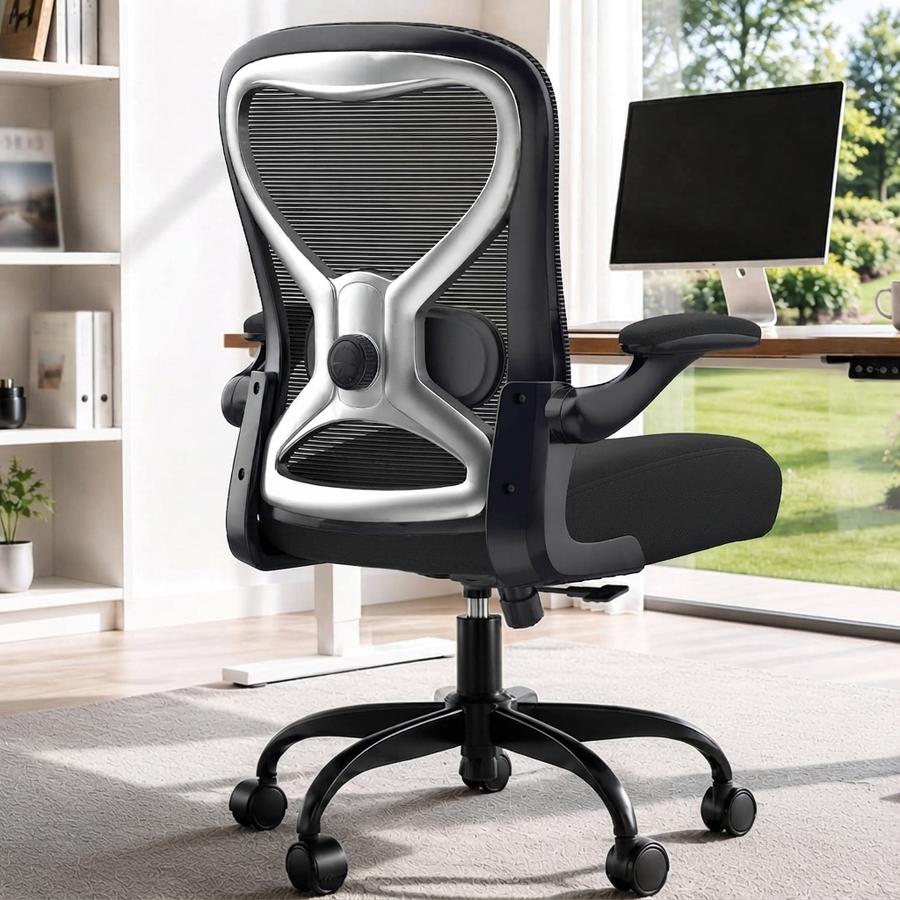
Casasio mesh desk chair in a bright home office
4.63★401 verified buyer ratings
330 lbRated capacity, 5-point base
15-30 minSolo build, hex key in the box
30 daysReturn window through the retailer

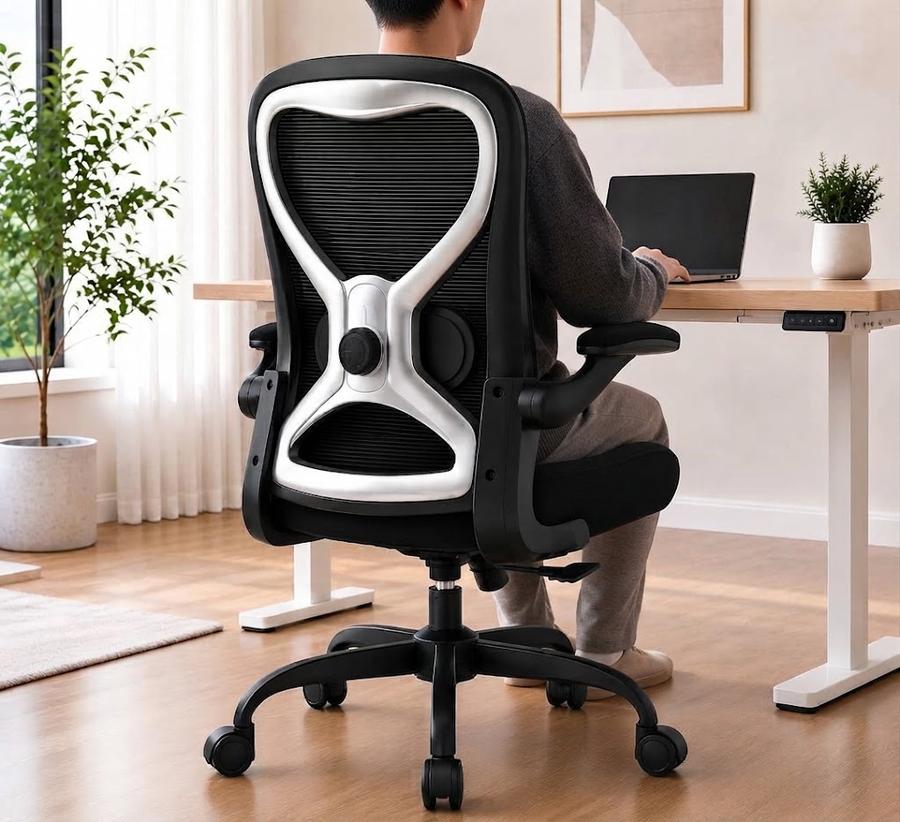
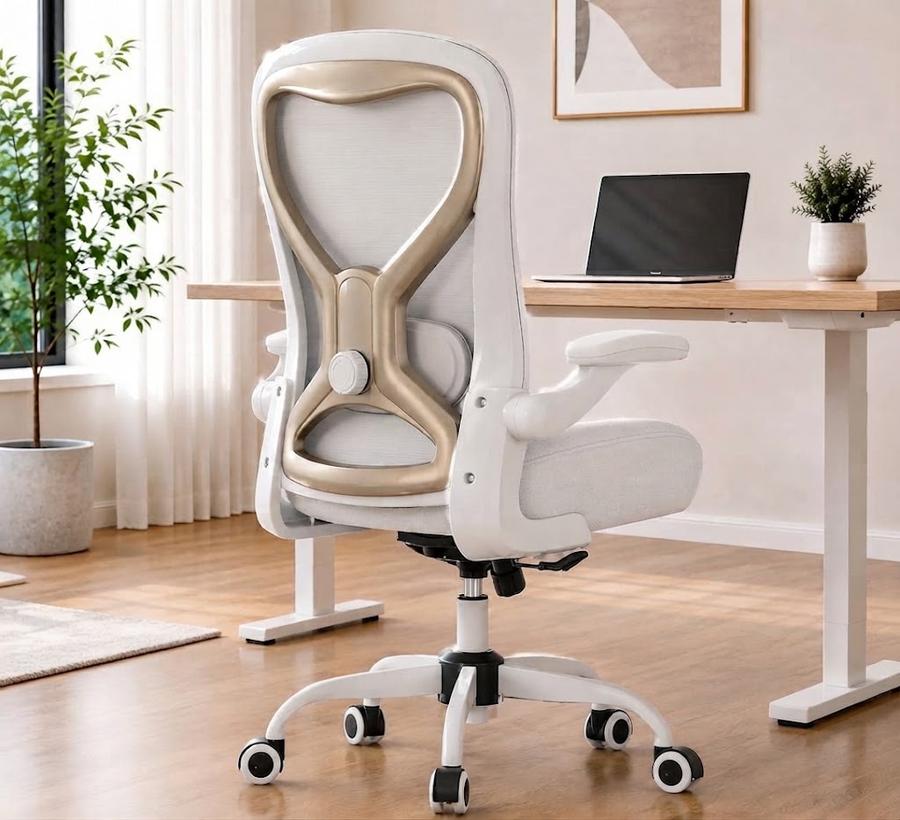
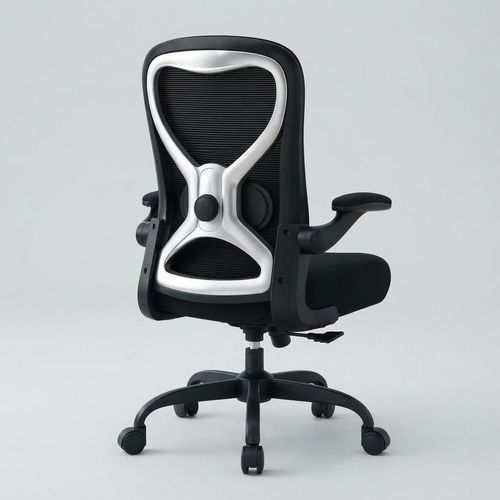
Mesh desk chairs in black-silver and white-champagne

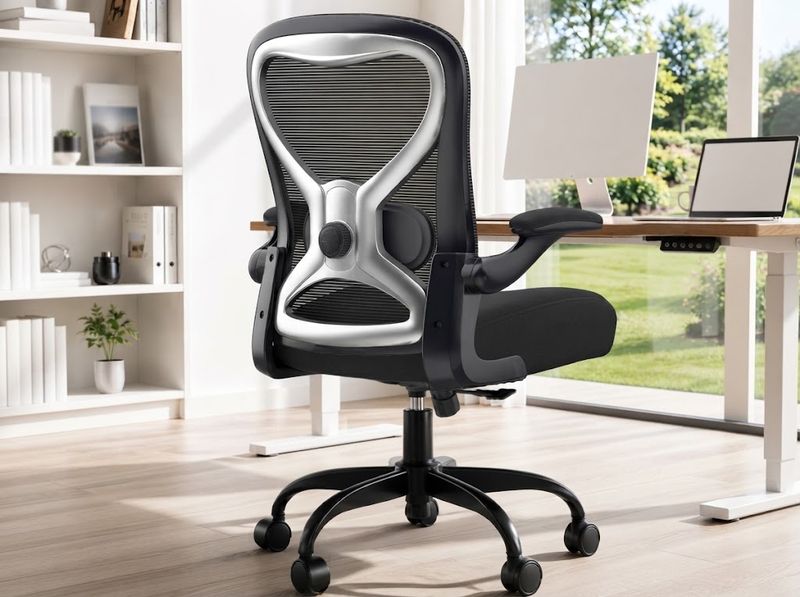
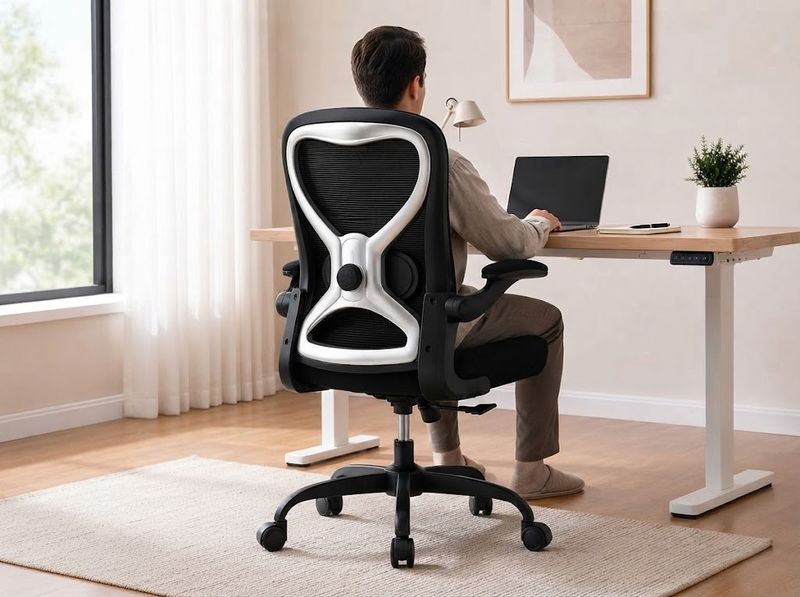
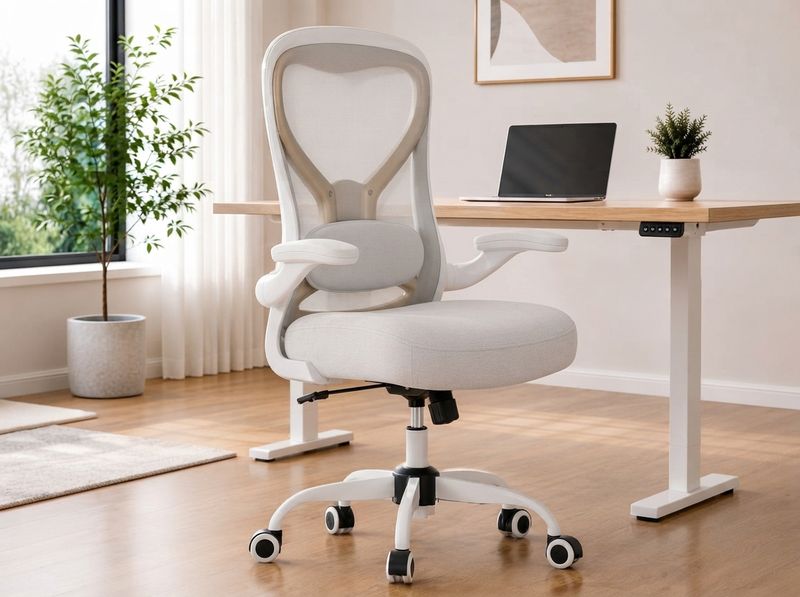
The black-with-silver frame disappears into a dark desk line; the white build lights a pale corner and wipes clean of winter scuff.

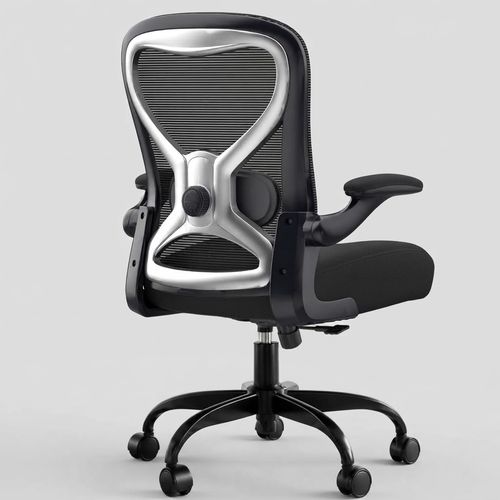
Casasio 4-Way Lumbar Mesh Chair, Black with Silver

Casasio 4-Way Lumbar Mesh Chair, Black with Silver

4.5 (225 ratings)

Roll this one under a desk apron that a fixed-arm chair has never cleared: both armrests fold vertical in a single motion and the seat slides flush to the edge. The lumbar pad rides a track rather than sitting molded into the mesh, so it moves toward your spine as well as up the backrest, which is the axis fixed-bump chairs skip. Where budget mesh seats dish out under the hips by month eight, the high-density foam here runs deeper than the 2-inch pads common at this tier and springs back after full workdays. Recline tension does not appear in this finish's specifications, unlike the champagne-accented builds. Rated to 330 pounds on a 5-point nylon base, with the standard return window through the retailer covering damaged arrivals.

  • Both arms fold vertical in one motion, so the seat rolls flush to a desk apron fixed arms never clear
  • The lumbar pad rides an internal track, moving toward your spine as well as up the backrest
  • 4.5 stars across 225 verified buyer ratings on this finish
Check today's price
Casasio Tilt and Rock Mesh Chair, Black with Silver

Casasio Tilt and Rock Mesh Chair, Black with Silver

4.8 (88 ratings)

Where a locked backrest holds you at one angle through a four-call afternoon, this finish adds Tilt & Rock with a tension knob you set to your own weight. Rocking works because the tension screw under the seat loads the mechanism against your body mass rather than a factory default, so a lighter sitter is not fighting a spring built for someone heavier. The memory-foam seat drew the strongest owner comments on this build, including one from a buyer with sciatic nerve damage who logged full work sessions without a flare. Owner ratings land at 4.8 stars across 88 verified entries. Assembly runs 15 to 30 minutes solo, and the return window through the retailer covers a unit that arrives cracked.

  • Set the tension knob to your own weight and the backrest rocks with you between calls
  • The tension screw loads the recline against your body mass instead of a factory spring rate
  • Return window through the retailer covers cracked or incomplete arrivals
Check today's price
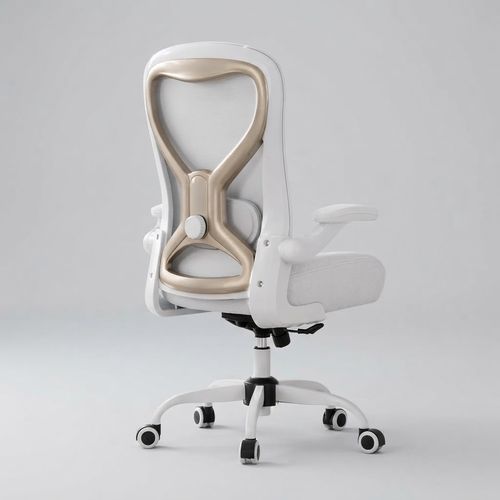
Casasio Tilt and Rock Mesh Chair, White with Champagne

Casasio Tilt and Rock Mesh Chair, White with Champagne

4.8 (88 ratings)

Your desk sits in a bright room where a black frame reads as a hole in the corner, and this is the build that solves it: white mesh with champagne accents on the base and arms. Underneath the finish it runs the same reinforced metal base and dual-direction lumbar pad as its darker sibling, rated for heavier sitters, plus a Tilt & Rock tension knob you can wind to your own weight between calls. Where painted budget frames chip at the caster mounts within a season, the champagne finish sits on the moulded arms rather than on a wear surface. It weighs 27 pounds assembled, builds solo in well under half an hour, and ships under the same return window as every other finish.

  • White mesh with champagne accents on a 27-pound frame that builds solo in under half an hour
  • Champagne sits on the moulded arms, not on the caster mounts, so a year of foot traffic leaves no chipped edge
  • Rocks with you between calls on a tension knob the black-and-silver build leaves out
Check today's price

The Moments This Chair Was Built Around

Each mechanism below traces back to a desk moment: the pull-in, the spine hunt, the heavier sitter, the August afternoon.

Chair rolled fully under a compact home-office desk, armrests folded vertica

Slide Fully Under the Desk in One Motion

Flip-up arms clear a 28-inch desk underside in one motion, so the chair tucks fully in instead of parking against the edge. Fixed armrests force the drag-and-shove routine every time you sit down. Here the hinge folds each pad vertical against the backrest, and the seat clears most desk aprons without a fight.

  • Fold both arms vertical in about a second, then roll the seat in until the front edge meets the desk apron.
  • The hinge locks each pad flat against the backrest, so it clears the desk lip instead of catching on it.
  • Where fixed-arm chairs park two inches short of the desk, this one parks flush and stays there all day.
See the flip-arm build
Close-up of the side lumbar dial with a hand turning it, mesh backrest and p

Dial the Lumbar to Your Own Spine, Not the Average One

Turn the side dial while seated and the pad slides 1.8 inches up or down and 1.06 inches toward your spine, no standing up to re-set it. Sit on a fixed molded bump for a full Tuesday and it splits the difference between a short spine and a tall one, pressing above the ache on both.

  • Give the dial a quarter-turn each morning of the first week until the pressure lands under the ache, not above it.
  • Push the pad forward and it rides a track inside the backrest, so a quarter-turn brings the curve to your spine instead of only sliding it higher.
  • Where a molded lumbar curve fixes one position for every sitter, this one holds wherever you leave it.
See the lumbar dial model
Five-arm nylon base with rolling casters photographed from a low angle on ha

Sit Down at 300 lbs Without the Frame Flexing

A 330-lb rating on a 5-point nylon base spreads the load across five arms instead of four, so the seat plate does not creak when a heavier sitter drops in. Budget mesh chairs cap near 250 lbs and start flexing well before that ceiling. One owner at 275 lbs reports the frame holding firm through daily workdays.

  • Lower yourself into the seat rather than dropping, and the base stays flat through months of daily use.
  • Five arms carry the load because each one takes a smaller share than a four-arm base at the same rating.
  • Where lighter frames creak at the seat plate inside a season, this heavy-duty mesh task chair stays quiet.
See the reinforced 5-point base
Backlit hourglass mesh backrest showing the weave and its S-curve profile

Stay Dry Through Back-to-Back Afternoon Calls

Hourglass mesh across the backrest moves air against your shirt through a 4 p.m. call block. A padded back traps heat instead and leaves a damp patch by the second meeting. The weave follows your spine's curve rather than sitting flat, so support and airflow come off the same panel.

  • Finish four calls in a row in August and the shirt behind your shoulder blades comes away dry.
  • Air passes straight through the weave because the panel carries no foam layer behind it to hold heat.
  • Where a padded backrest turns into a heat trap by the second hour, this one vents the whole afternoon.
See the mesh-back finish

Why This Chair Replaces the One That Failed You

Casasio built these around the failures buyers named: packed-down foam, armrests jammed on the desk edge, a lumbar bump that missed.

Stop the 2 p.m. Tailbone Ache

Drop into the 3.54-inch high-density foam at 9 a.m. and it still holds shape at 5 p.m., with no packed-down dip under your hips.

Arms That Clear the Desk Edge in One Motion

Flip the arms up, roll the seat fully under a 28-inch desk, then drop them back down without standing.

Lumbar That Moves In as Well as Up

Turn the dial once at setup and the pad slides toward your spine, not just up the backrest, which is the axis budget chairs skip entirely.

Picture the Build Finished Before Dinner

Open the box after work, tighten the bolts with the included hex key, and sit in it within 30 minutes without a helper.

Rated 330 lbs Where Budget Mesh Stops Near 250

A heavier sitter reports the 5-point base staying firm through daily workdays, comfortably inside a rating budget frames fall short of.

If It Arrives Dented, It Goes Back Free

Unbox it, check the base and casters within the return window, and send it back through the retailer at no cost if anything cracked in transit.

The Numbers Most Mesh Chair Pages Leave Out

Casasio prints the pad travel, the rated capacity, and the cushion depth, so you can hold a tape to them at your own desk before the return window closes.

1.8in up / 1.06in in-out

Move the pad up the backrest or pull it toward your spine, and the ache under your belt line stops showing up by the end of the first week.

Without a travel figure on the page, you order on a guess and learn on the third afternoon that the pad parks two inches above the ache.

manufacturer spec

330 lbs

Drop your full weight into the seat and the 5-point nylon base takes it without the flex that shows up on lighter frames.

Capacity guides round to about 300 pounds or more, so you sit down on a rounded number and test the base with your own weight on day one.

manufacturer spec

3.54in seat cushion

Eight hours in, the high-density foam still holds its shape, with no packed-down dip under your hips by dinner.

Nothing on the page prints a thickness, so you press a thumb into the cushion the day it lands and judge the foam with half the return window gone.

manufacturer spec

15-30 min / 26-28 lb frame

Lift the frame out of the box alone, tighten the bolts with the included hex key, and sit down before the evening is gone.

Build time rarely appears beside the parts weight, so you hold the order until a friend is free on Saturday, or clear a whole afternoon for a job that ends in half an hour.

manufacturer spec

4.63★ / 401 ratings

Owners who logged full workweeks in this chair land it at a 4.63-star weighted average, a sample deep enough to survive a handful of outliers.

Scroll a private-label frame carrying nine reviews and you are betting a full workweek of sitting on a sample too thin to read.

401 verified buyer ratings

5'1" to 6' tall

A shorter sitter and a taller one both find the curve at their own spine, instead of splitting a mid-back bump sized for neither.

A shorter sitter with sciatic pain measures her own spine against a range nobody published, then finds out on the first afternoon whether the pad reaches that low.

manufacturer spec

From Box to Desk Without a Second Pair of Hands

Cut the tape on a 26-lb box after work and you sit in a chair dialed to your own spine inside half an hour.

  1. 1

    Unbox and Bolt

    Lift the frame clear of the box after work, then drive the base bolts in a cross pattern with the carton's hex key, snug and not forced.

  2. 2

    Set Height, Then the Pad

    Raise the seat until your forearms run level with the desktop, then dial the pad to where your spine lands; height moves your hips first.

  3. 3

    Sit an Hour Before the Box Goes Out

    Keep the carton flat in the hallway through the first hour of sitting, because a return is far easier while the box is still there.

Owners on the seat foam, the arms, and the lumbar dial

Buyer reviews collected on the retail listings, including the one owner who does not get on with the lumbar dial.

★★★★★ Verified Purchase

Great office desk chair! Easy to assemble and clearly detailed instructions. The seat cushion is memory foam and the chair adjusts nicely to my back and neck. The wheels and adjustment mechanisms are smooth. Quality product. I will buy another chair.

Marcus D.Tilt and Rock Mesh Chair, Black with Silver

★★★★★ Verified Purchase

My wife loved the chair! It is way more comfortable than the chair she was using previously. It has a great lumbar support. On top of all this, it was easy to put together, and has beautiful colors too!

Anthony R.Tilt and Rock Mesh Chair, White with Champagne

★★★★ Verified Purchase

SEAT: feels like I am sitting on thick memory foam. At first sit I thought maybe a little too firm, but after I sat at my desk to type, I found the seat comfy. MESH BACK: reasonable support, which is better than too firm. I have learned that if mesh is too rigid it causes lower back aches, so I avoid hard mesh chairs. LUMBAR: turn the dial to push the cushion toward your lower back, or away from it. This is my first chair that does this, and I am not sure I like it. I constantly feel it, even at its loosest setting. ASSEMBLY: very easy.

Karen P.Tilt and Rock Mesh Chair, White with Champagne

★★★★★ Verified Purchase

The chair was easy assembly. Seems to be very sturdy. I weigh 275 lbs. Chair feels firm but comfortable.

Denise W.4-Way Lumbar Mesh Chair, Black with Silver

★★★★★ Verified Purchase

The chair is so comfortable. The seat has great cushioning, and I love that the arms flip up!

Priya N.Tilt and Rock Mesh Chair, Black with Silver

★★★★★ Verified Purchase

I am very happy with my chair! It was very easy for me, an older single lady, to put together by myself, even with bad hands. Your instructions made the process so simple.

Eleanor B.4-Way Lumbar Mesh Chair, Black with Silver

★★★★★ Verified Purchase

It has been around a week I am using the chair. Really appreciate the support, the lumbar adjustment is great. The chair is really comfy for a work day. I only had compliments on how it looks with its modern mesh and back design. The armrest moving upward eases the storage under the desk, as I am quite tall and usually I need to lower the chair to fit it under my desk. Overall a great choice.

Tomas L.Tilt and Rock Mesh Chair, Black with Silver

★★★★★ Verified Purchase

This chair is incredibly comfortable. The memory foam seat cushion is phenomenal, and that is coming from someone with sciatic nerve damage. I was a little worried it would not be supportive enough, but it is actually amazing for long work sessions. I feel well supported the entire time I am in it. It took me about 25 minutes to put it together by myself. The instructions were easy to follow, all the hardware was clearly marked, and they even included some spares. All the parts felt really well made. No sloppy welding, no bubbling or powder coat issues, everything looked solid and clean right out of the box.

Renee A.Tilt and Rock Mesh Chair, White with Champagne

Built Around the Chair That Failed You Last

Casasio desk chair beside a home office window

Casasio drew this chair against one failure pattern: foam packed flat by month eight, armrests bolted at a single height, a lumbar bump two inches above where your back bends. One gap ships with it too, and the bullet points bury it.

Start with what moves. The lower-back pad tracks on two axes instead of one, so you hunt for your own curve rather than accept a factory setting. The seat holds its shape under your hips instead of dishing out by month three. Now the gap: no headrest comes on any finish, and seat depth is fixed at 20 inches with no slide track.

A first-time solo assembler with limited hand strength built the 26-lb frame in under 30 minutes using the included hex key, with nobody on hand to lift it into place. Heavier steel-framed chairs in this category usually need two people just to seat the gas cylinder.

You choose between a black-with-silver finish and a white-with-champagne one. Both ride the same frame and the same 4.63-star record across 401 buyer ratings.

The full brand record

What Buyers Worry About Before They Click

Casasio owners name the same failures after year one: a dished cushion, arms that jam the desk edge, a lumbar bump that misses.

The Cushion That Flattens by Month Eight

Toss the seat cushion that dished out under your hips last winter. The high-density foam here holds its loft through eight-hour days, and owners describe the seat as firm at first contact and comfortable once they settle in for typing work.

Holds loft through 8-hour days

Armrests That Jam Against the Desk Edge

Fixed arms leave the chair parked four inches out, so you reach forward all day and your shoulders pay for it by Friday. Flip these up and the seat rolls flush to the desk apron in one motion, then drops back down when you push away.

A Lumbar Bump That Never Reaches the Sore Spot

Generic backrests bolt the curve at one average height, and a short spine arches over it from the first email to the last call. Casasio's pad ends the day where your ache actually sits, and by Friday you stop noticing the backrest at all.

Neck Support Stops at Shoulder Height

Nothing on this frame catches your head above the shoulders, so a mid-call lean back finds air at neck height. If you rest your neck between calls, a mid-back chair like this one will not do it. Sitters who stay upright through back-to-back calls rarely reach for it; the ones who nap at the desk will.

No Brand-Confirmed Warranty Term

Casasio publishes no warranty term with the chair, and a five-year claim in one buyer review is not a policy you can hold. What does apply: the standard return window through the retailer, which covers a base that arrives cracked or a bolt bag that never made it. Roll the casters across the floor and count the hardware the evening it lands, while that window is still wide open.

Return window through the retailer covers a cracked base or a missing bolt bag. Pick a finish to compare specs.

Day 1 to Year One in the Same Seat

From the first bolt tightened at 30 minutes to the second winter of eight-hour shifts, on the same frame.

  1. Day 1

    Day 1, after work: you have the frame bolted and rolling before dinner, and you spend the evening finding your seat height instead of reading a diagram. Check the casters and base for shipping cracks the same night, because the return window through the retailer covers a damaged arrival.

  2. Week 1

    Give the pad a quarter-turn each morning until the pad stops announcing itself and your lower back stops aching at 3 p.m.

  3. Month 1

    The seat foam still springs back after eight-hour days, and the mesh has not started dishing behind your shoulder blades.

  4. Year 1+

    The base still sits flat under full rated load, and the arms still fold without the hinge play that shows up on plastic-hinged budget chairs.

Ready for Day 1? The black-with-silver build ships with the same hex key as the champagne one.

Who This Chair Actually Fits

Casasio sized this frame for the sitter who spends nine hours at the same desk, dials the pad to their own ache, and builds it alone on a weeknight; one sitter should skip it outright.

Remote Worker Replacing a Chair That Went Soft

Sit through a full Tuesday and the seat foam still pushes back at 5 p.m. instead of leaving you perched on the frame edge. The pad under your lower back holds its position rather than sliding out from behind you by mid-afternoon.

The Solo Assembler With Weak Hands, Building It Tonight

Lift a 26-lb frame out of a box that arrives smaller than you expect, drive the bolts with the included hex key, and finish before the evening news. One buyer swapped the hand tool for a power driver with the right bit and had the base bolted in ten minutes.

Sciatic-Pain Sitter Who Needs the Bump to Move

One owner with sciatic nerve damage reports full work sessions without the flare they braced for. Inside a week the pressure settles under the sore spot rather than across it, and standing up mid-afternoon stops being the fix.

The 5'1" or 6' Sitter Outside the One-Size Curve

A shorter sitter cranks the pad down its full travel and finds the curve under her belt line inside the first afternoon; a taller one runs the dial the other way and lands it just above the waistband. Standard backrests bolt the curve at one average height and leave both of them arching around it all day.

Where this frame is the wrong buy

  • Not the right fit if you tip your head back between calls, because no finish on this frame ships with a headrest and no bracket bolts one on later.
  • Skip it if you sit past the rated ceiling, or if your office requires a BIFMA-certified frame for an 8-hour shift, because that certification is not documented for this chair.

Why the Chair Is Built This Way

Casasio builds around the eight hours you actually sit, not the photo on the box, and every design call below carries a figure you can measure yourself.

Fit Before Flash

Run a tape over the seat and the backrest before the return window closes: every claim on this page carries a number, and nothing here rides on the word ergonomic.

Checked Before the Crate Is Taped

Each chair passes its inspection before the box is taped, so the casters press into their sockets on the first push instead of sending you hunting for a missing part on a Sunday evening.

Airflow and Support From the Same Panel

Sit through back-to-back calls in August and the hourglass mesh keeps your shirt off your back while the same panel holds the curve of your spine.

Support You Can Reach Directly

Email the manufacturer's own support desk about a missing caster and the answer comes from the team that packed the crate, not a third-party seller queue you wait out for a week.

Lumbar travel, desk clearance, and what ships in the box

Straight answers on capacity, assembly, the missing headrest, and what the return window actually covers.

What is the Casasio Home Office Chair?

A mesh-back ergonomic home office chair rated to 330 lbs, built for desk sessions running eight hours or longer. The backrest carries an hourglass mesh panel that follows the spine's curve, and the seat holds high-density foam 3.54 inches deep. Both armrests flip vertical, so the whole chair rolls under a desk instead of parking against the apron. A side dial moves the lumbar pad up the backrest and toward your spine, which is the second axis most chairs in this bracket leave fixed. It ships in a black-with-silver finish and a white-with-champagne one, both on the same nylon base.

Who is this chair actually built for?

Desk workers logging eight-hour sessions on a chair that already failed them once. The owner profile skews toward remote workers replacing packed-down foam, first-time solo assemblers, and sitters at both ends of the published height range who never found the lumbar curve on a fixed-bump backrest. Anyone who needs head and neck support above shoulder height should look at a high-back model instead.

What separates this from other mesh task chairs in the same bracket?

Two axes of lumbar travel instead of one. Most mesh chairs below the premium tier fix the bump in place or let it slide up and down only. This pad also moves toward and away from your spine, so pressure lands on the vertebrae that ache rather than the average ones. Flip-up arms and a higher rated ceiling round out the difference.

Is this chair worth buying?

It fits a specific buyer: someone replacing a failed chair, sitting eight hours a day, and wanting lumbar adjustment that moves on two axes without premium-tier money. Owner ratings land at 4.63 stars across 401 verified buyer ratings. It falls short if you need a headrest, a documented BIFMA certification, or a published warranty term, because none of those exist for this frame.

What is the rated weight capacity?

330 pounds, taken from the maximum weight recommendation in the structured product data across every finish. Some bullet copy claims 350 pounds; the structured field is the figure to trust, and it is the one this page plans around. Load spreads across a 5-point nylon base with rolling casters, where each arm carries a smaller share than a four-arm layout would at the same rating. One owner at 275 pounds reports the frame feeling firm through daily use rather than flexing under the seat plate. Sitters near the ceiling should lower into the seat rather than drop into it.

How far does the lumbar support actually move?

Up and down 1.8 inches, in and out 1.06 inches, per the manufacturer specification. That second axis is what most adjustable-lumbar claims leave out. Turning the side dial pushes the pad toward your lower back or retracts it while you stay seated. The combined range covers sitters from roughly 5'1" to 6' without a spacer or an aftermarket cushion.

How long does assembly take?

15 to 30 minutes solo with the hex key in the box. Owner accounts back the range: one buyer finished in about 25 minutes working alone, another in roughly 15. Spare screws come included. The frame weighs 26 to 28 pounds depending on finish, light enough for one person to lift the seat onto the base without a second set of hands.

What happens if the chair arrives damaged?

The standard return window through the retailer covers a unit that shows up cracked, dented, or missing hardware. Inspect the base, the casters, and the gas cylinder the day the box lands rather than after the window closes. Photograph anything wrong before you start assembly, because returning a partially built chair is harder than returning one still packed.

Does the chair come with a warranty?

No warranty term appears in the structured product data for this chair. One buyer review mentions a five-year warranty from the manufacturer, but a customer's account is not a published brand policy and should not carry a purchase decision. What does apply is the retailer's standard return window, which covers a unit arriving cracked, dented, or short on hardware. If a written warranty term matters to you, ask the manufacturer's support desk for it directly before ordering, and get the answer in writing rather than inferring it from another buyer's review text.

Where can I buy it?

The chair sells online through the retailer, where pricing and stock update continuously. Check today's price on the finish you want rather than planning around a figure quoted elsewhere, since online prices move. Every finish ships from the same manufacturer with the same tools and hardware in the box, so the choice comes down to color and recline tension.

Can one person assemble it with limited hand strength?

One buyer described herself as an older woman with bad hands who built it alone using the included instructions. The heaviest single lift is the seat onto the base, not the whole chair at once, and the full frame runs 26 to 28 pounds depending on finish. Another owner skipped the supplied hand tool and used a power driver with the right bit, which cuts the work considerably when turning bolts by hand hurts. Spare screws come in the box. Clear the floor space first, because loose hardware disappears into carpet fast.

How do I measure desk clearance for a flip-up-arm chair?

Measure from the floor to the underside of your desktop, then subtract the seat height at its lowest setting. Whatever remains is your armrest budget. With the arms flipped vertical, the pads sit against the backrest and clear the desk apron entirely, which is the point of a flip-up arm desk chair. Fixed-arm models park two inches out because the pad hits the apron first.